✈

Welcome to AME QUESTION PAPER

Sign in to access your study materials, mock tests and more.

Login with Google

Sign in with Google. New users get an account automatically.

G Sign up with Google

New user? Create your account with Google.

Login / Sign Up with Email

✈
AME QUESTION PAPER
www.amequestionpaper.in
Skip to content
✈ India's AME Exam Preparation Platform Serving AME Students Since 2017
Premium Study Material WhatsApp Support Contact
AME Question Paper
Home
📘 DGCA Question Papers Previous papers & short notes ⭐ Premium Study Material Premium DGCA AME modules 📚 AME Reference Books Recommended reference material 🌐 EASA Papers & Notes EASA examination resources
Mock Tests RTR(A) Jobs News Blogs
⌕ Login / Sign Up
Premium Study Material
Home 📘 DGCA Question Papers & Notes ⭐ Premium Study Material 🎯 Premium Mock Tests 📚 AME Reference Books 🎙 RTR(A) 💼 Aviation Jobs 📰 Aviation News ✍ Blogs Login / Sign Up

5 Fun Facts About Airplane Tires

May 7, 2022
in Blogs
A A
5 Fun Facts About Airplane Tires

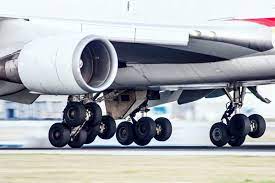
Although they spend most of their time in the air — at least when they are moving — airplanes require tires to take off, land and move across the runway. Airplanes don’t just use automotive-grade tires, though. Due to their heavyweight construction, they require heavy-duty tires to accommodate their weight. Below are five fun facts about airplane tires, some of which may surprise you.

#1) Stabilizing Tread Pattern

The tread on airplane tires is different than that of automotive tires. To increase stability in the otherwise windy conditions, manufacturers use a special tread pattern on airplane tires. The tread pattern helps to create traction between the tires and the runway, thereby reducing the airplane’s movement in windy conditions. This stabilizing tread pattern also reduces the risk of hydroplaning, which can occur if the runway is wet.

#2) The Big 4

There are hundreds if not thousands of different airplane tires on the market. With that said, most of them are manufactured by one of four brands: Goodyear, Michelin, Bridgestone and Dunlop Aircraft Tyres. Reports show that these four brands account for roughly 80% to 90% of all airplane tires sold globally.

#3) Blowout Proof

Tire blowouts are almost unheard of in the aviation industry. Blowouts, of course, occur when an excessive amount of force is exerted upon a tire’s inner walls. If a tire is overinflated, for instance, the excess force may cause it to blow out. With that said, airplane tires are required to withstand at least four times the pressure for which they are rated over a period of at least three seconds.

#4) Potential for Overheating

While they are practically blowout proof, airplanes tires are susceptible to damage when exposed to heat. Overheating may occur if a pilot is forced to quickly brake on the runway during an emergency. Sudden braking creates friction between the tires and the runway. Friction, in turn, produces heat that can literally melt away some of the tread. Overheating isn’t a common occurrence. Instead, airplane tires generally only overheat when a pilot is forced to quickly brake during an emergency.

#5) Inflated With Nitrogen

Unlike automotive tires, airplane tires are filled with air. They are filled with nitrogen gas. In the past, some airplanes used oxygen-filled tires. The use of oxygen led to several incidents in which the tires exploded. Nitrogen is considered an inert gas, so it doesn’t have combustible properties. Therefore, filling tires with nitrogen is a safer solution.
Related Posts

AMOS APN Finder
Blogs

AMOS APN Finder

October 16, 2026
MEL Calculator
Blogs

MEL Calculator

October 16, 2026
Blogs

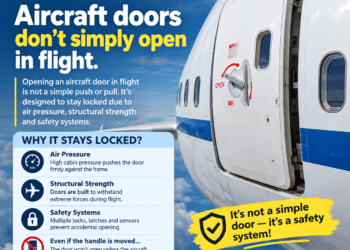
WHY DON’T AIRCRAFT DOORS SIMPLY OPEN IN FLIGHT?

September 7, 2026
Why airplane windows have tiny holes?
Blogs

Why airplane windows have tiny holes?

September 7, 2026
Why airplane windows have tiny holes?
Blogs

Why Your Ears Pop When Flying in an Airplane

September 7, 2026
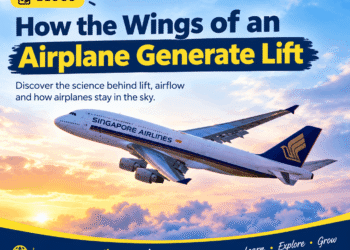
How the Wings of an Airplane Generate Lift
Blogs

How the Wings of an Airplane Generate Lift

September 7, 2026

Preparing for DGCA AME exams?

Previous year papers, B1 & B2 notes and DGCA-pattern mock tests – all in one place.

Take a Mock Test DGCA Question Papers & Notes
AME QUESTION PAPER

India's first online platform for AME candidates, serving students since 2017 with quality study material for DGCA and EASA exams.

11,75,112 Global visitors
Since 2017 Serving AME students

Study Resources

  • DGCA Papers & Notes
  • Mock Tests
  • EASA Papers & Notes
  • AME Reference Books
  • RTR(A) Classes
  • Members' Results

Quick Links

  • Home
  • About Us
  • Aviation Jobs
  • Aviation News
  • Blogs
  • My Dashboard

Help & Policies

  • Contact Us
  • Terms & Conditions
  • Privacy Policy
  • Refunds & Cancellations
  • Disclaimer

Get in Touch

  • WhatsApp Support +91 75593 69412
  • Support support@amequestionpaper.in
© 2017–2026 AME QUESTION PAPER. All rights reserved. Design by AME QUESTION PAPER ❤

Ok

Create New Account!

Fill the forms below to register

All fields are required. Log In

Retrieve your password

Please enter your username or email address to reset your password.

Log In
✈
AME QUESTION PAPER Support www.amequestionpaper.in
Hi! 👋 How can we help with your DGCA Exam Preparation?
What do you need help with?
DGCA QUESTION PAPERSMOCK TESTRTR(A) CLASSESGUIDANCE
Start WhatsApp Chat WhatsApp Support: +91 75593 69412
No Result
View All Result
  • Home
  • AME
    • DGCA QUESTION PAPER & NOTES
    • MOCK TEST
    • AME REFERENCE BOOKS
    • EASA QUESTION PAPER & NOTES
  • RTR
  • JOBS
  • News
  • Blogs
  • Login
  • Sign Up

Copyright 2017-2026 © All rights Reserved. Design by AME QUESTION PAPER ❤

Insert/edit link

Enter the destination URL

Or link to existing content

    No search term specified. Showing recent items. Search or use up and down arrow keys to select an item.