✈ India's AME Exam Preparation Platform Serving AME Students Since 2017
DGCA RTR(A) Exam Guide & Classes | AME Question Paper

DGCA RTR(A) Exam Preparation
Clear It on Your First Attempt

A clear guide to the Radio Telephony Restricted (Aeronautical) examination: eligibility, Part I written CBT, Part II practical/oral viva, syllabus, preparation topics and RTR(A) classes.

✈ Pilots 🛠 AME Students & Engineers 🎙 ATC Communication Skills
Aviation training and radio communication
AVIATION RADIO • TRAINING DISPLAY 121.500
PART IWritten CBT • 50 MCQs
PART IIPractical / Oral Viva
Conducted by DGCAFrom Regular Session 04 of 2025 onwards
Aeronautical RadioFor aviation communication operations
Two-Part ExamWritten CBT + practical/oral viva
Exam-Specific TrainingProcedures, phraseology & radio principles

Important Notice – RTR (A) Examination

The Radio Telephone Operator (Restricted) – RTR (A) Examination is now conducted by the Directorate General of Civil Aviation (DGCA), Government of India.

The Wireless Planning & Coordination (WPC) Wing / Department of Telecommunications (DoT) no longer conducts the RTR (A) examination.

Candidates who wish to appear for the RTR examination must register and submit their examination application through the DGCA Pariksha Portal.

Conducting Authority:
Directorate General of Civil Aviation (DGCA)
Examination:
Radio Telephone Operator (Restricted) – RTR (A)
Application Portal:
DGCA Pariksha Portal
Effective from:
Regular Session 04 of 2025 (December) onwards

Candidates are advised to check the DGCA Pariksha Portal regularly for examination schedules, application dates, admit cards, examination centres and results.

Open DGCA Pariksha Portal →
RTR(A) Explained

What is RTR(A)?

RTR(A) is the Radio Telephone Operator (Restricted) examination for aeronautical radio communication. From Regular Session 04 of 2025 (December) onwards, the examination is conducted by the Directorate General of Civil Aviation (DGCA), Government of India.

🎙

Radio Communication

Develop correct aviation radiotelephony procedure, phraseology, message handling and communication discipline.

✈

Aviation Focus

Preparation centers on real aeronautical communication situations, procedures, navigation aids and operating knowledge.

📡

DGCA Examination

The RTR(A) examination is conducted by DGCA. Candidates should use the DGCA Pariksha Portal for current examination notices, applications, admit cards and results.

Eligibility

Who should prepare for RTR(A)?

Designed for aviation professionals and students who need strong aeronautical radio communication knowledge.

👨‍✈️

Pilots

For candidates preparing to use aviation radio equipment and communicate professionally with ATC and ground stations.

🧑‍🔧

AME / Engineers

Useful for Aircraft Maintenance Engineering students and professionals requiring aeronautical communication knowledge.

🎓

Aviation Candidates

Suitable for learners building practical phraseology, regulations, navigation-aid and radio-principles knowledge.

Exam Structure

RTR(A) Examination Pattern

The current format combines a computer-based written test with a simulated practical/oral assessment. Prepare for both knowledge and accurate ATC communication.

Part I

Computer-Based Test / Written

50 multiple-choice questions (MCQs) on regulations, radiotelephony procedures and radio principles.

Passing requirement: 70% · 35/50
  • 50 MCQs • minimum 70% to pass (35 correct answers)
  • No negative marking
  • Regulations, procedures and aviation phraseology
  • Radio principles, communication equipment and navigation aids
  • Aeronautical communication and emergency procedures
Part II

Practical / Oral Viva

Scenario-based simulated ATC communication and oral assessment of operational radiotelephony skills.

Passing requirement: 50% · 50/100
  • Minimum 50% to pass (50 out of 100 marks)
  • Simulated ATC transmissions and correct readbacks
  • Start-up, taxi, departure, en-route and arrival communication
  • Position reports, meteorological messages and clearances
  • Distress, urgency and radio-failure procedures
Exam-date note: Do not rely on an old fixed month/city table. Check the latest DGCA Pariksha Portal notice before applying.
Syllabus

What You Need to Study

Review the key regulations, radio principles and communication procedures tested in the examination.

Regulations & Procedures

✓International radio regulations and aeronautical communication rules
✓Aeronautical Q-codes, abbreviations and standard terminology
✓General radiotelephony communication procedures
✓Distress, urgency, safety and direction-finding procedures
✓Words, figures and phonetic spelling used in R/T
✓Aircraft radio licensing and operational requirements
✓FIRs, communication facilities and relevant frequencies in India
✓Meteorological codes, briefing services and NOTAM-related awareness

Radio Principles & Practice

✓Voltage, current, resistance, power, frequency and wavelength
✓Radio-frequency propagation, fading, skip distance and ground effects
✓HF/VHF communication concepts and frequency selection
✓SELCAL, aircraft intercommunication and announcing systems
✓Microphones, headsets, squelch, AVC, volume and tuning
✓Simplex/duplex operation and communication limitations
✓Elementary radio-navigation aids and practical operation
✓Typical aircraft and ground-station R/T installations

Preparation Roadmap

How to Prepare Effectively

Build knowledge first, then convert it into accurate, confident radiotelephony performance.

Learn the Rules

Understand aviation R/T regulations, standard terms, abbreviations and communication priorities.

Practice Phraseology

Train read-backs, calls, reports, emergency communication and message handling aloud.

Master Part II

Prepare radio principles, navigation aids, propagation, aircraft systems and practical oral questions.

Take Mock Sessions

Use simulated Part I scenarios and viva-style Part II practice to identify weak areas before the exam.

Exam Readiness

Practice the Full Flight Communication Sequence

Build confidence with realistic scenarios and accurate standard phraseology.

Before Departure

ATIS, start-up clearance, pushback, taxi instructions and runway hold-short readbacks.

During Flight

Departure instructions, frequency changes, position reports, altitude assignments and arrival clearances.

Abnormal Situations

MAYDAY, PAN PAN, radio failure and other time-critical transmissions using standard procedures.

Amogh Gangrade Sir
RTR(A) Classes

Training with Amogh Gangrade Sir

Prepare for both parts of the RTR(A) examination with structured coverage of aviation radio procedures, standard phraseology, technical concepts and practical communication scenarios.

✓ Radiotelephony communication practice
✓ Radio principles & regulations
✓ Navigation aids & radio principles
✓ Exam-focused mock sessions
✓ Application guidance
✓ Revision support
Enquire on WhatsApp →
Results & Feedback

Student Results

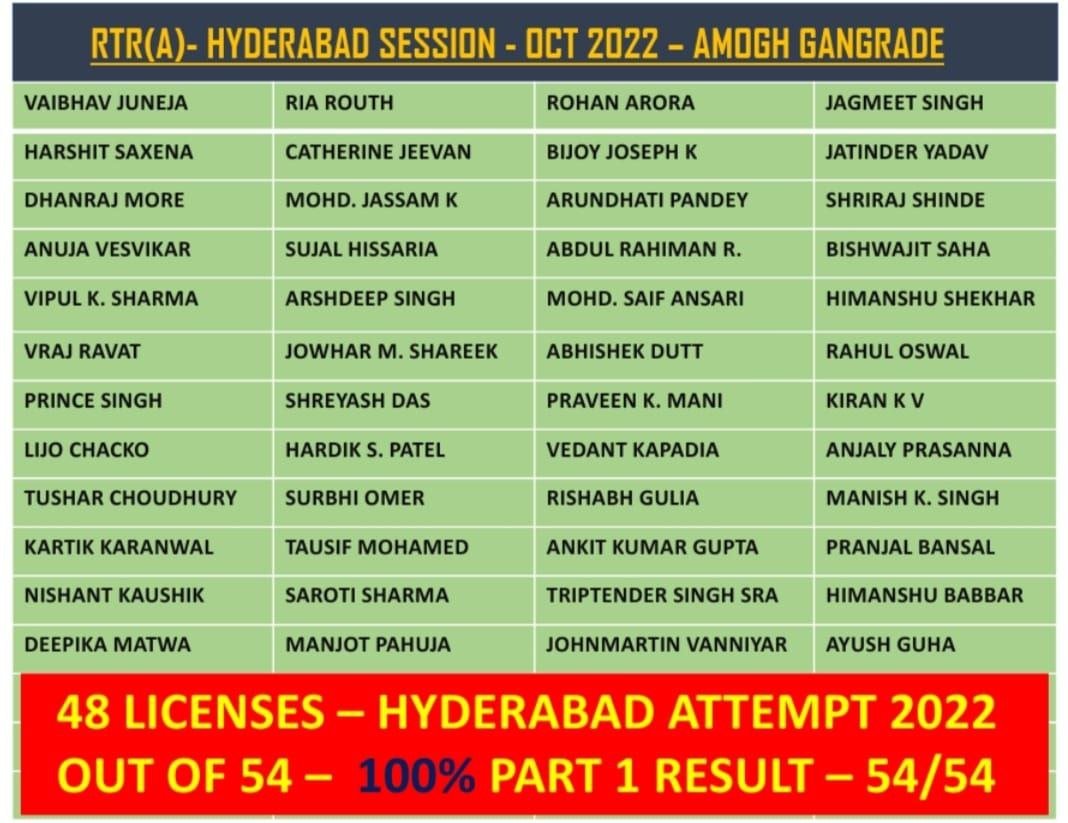
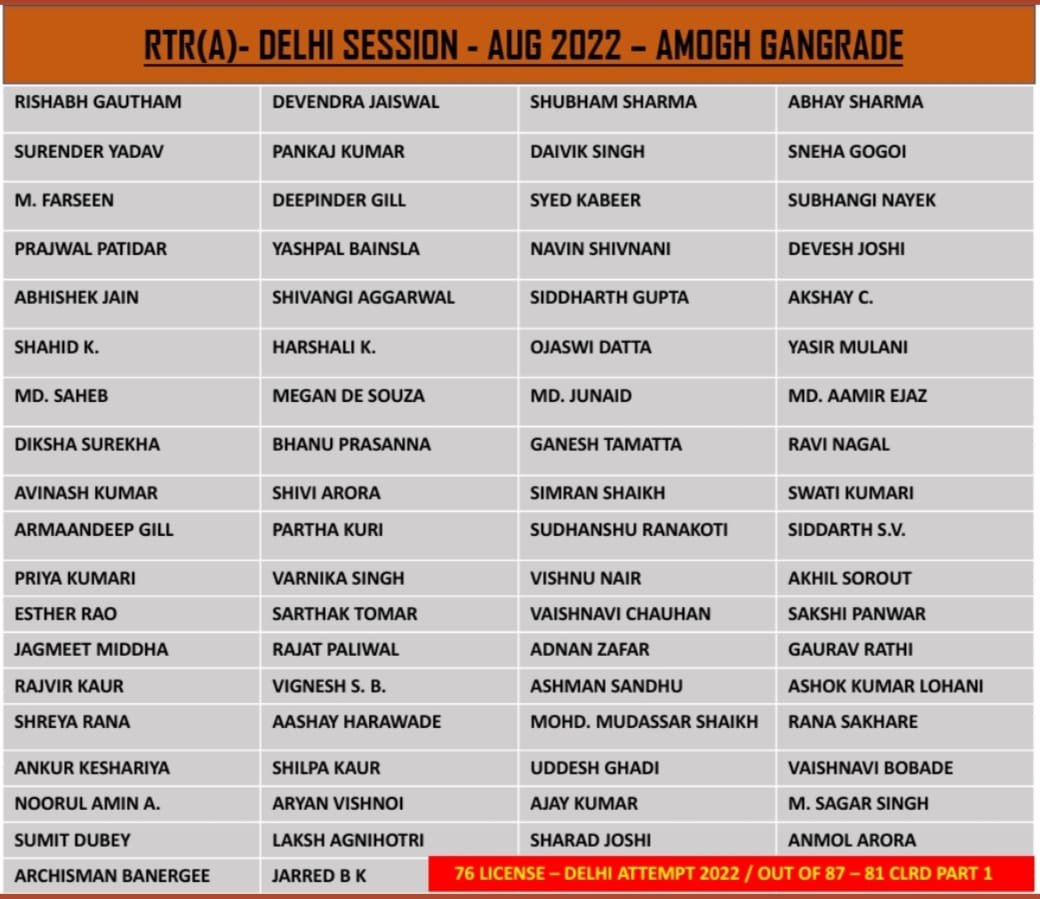
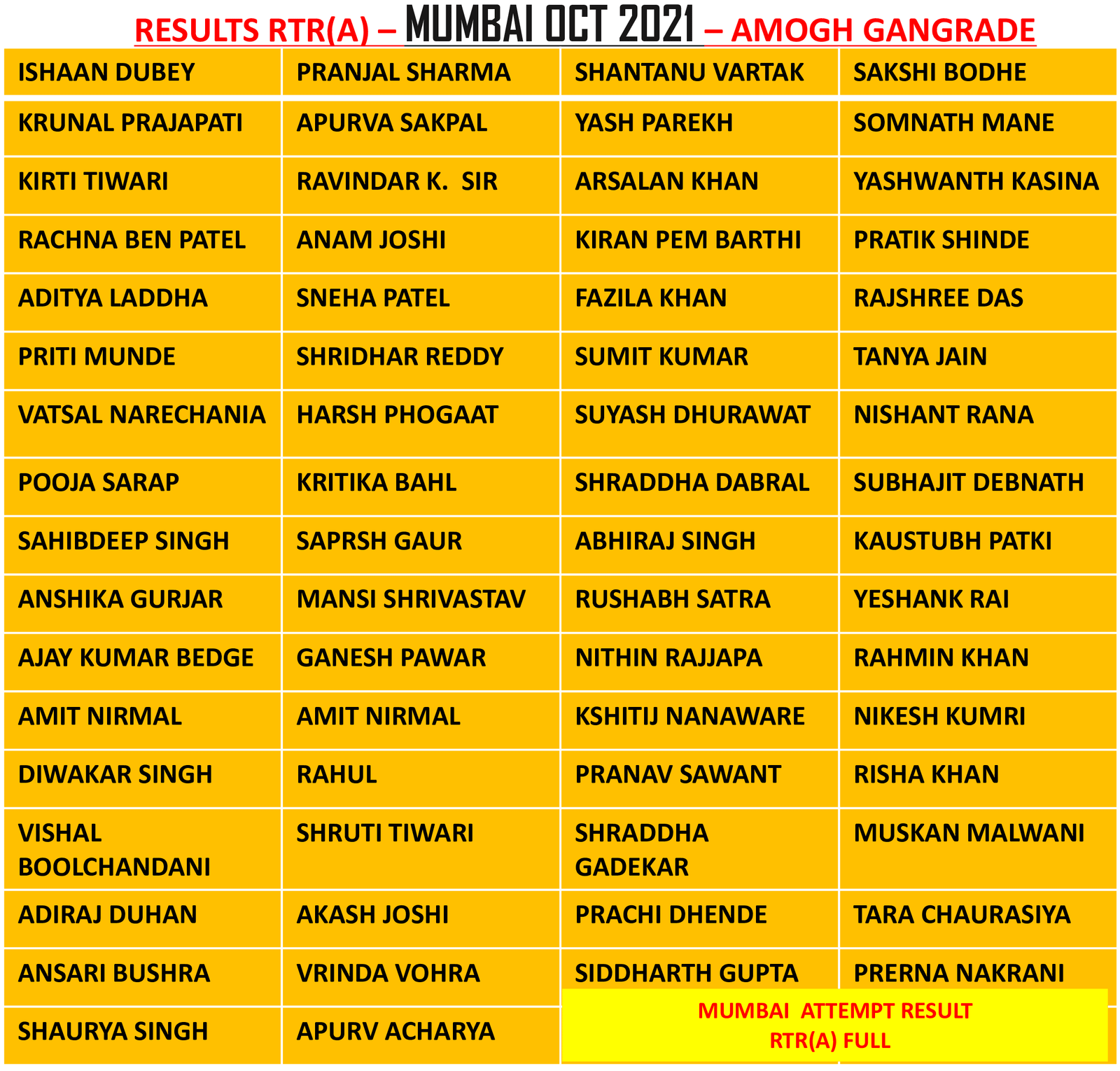
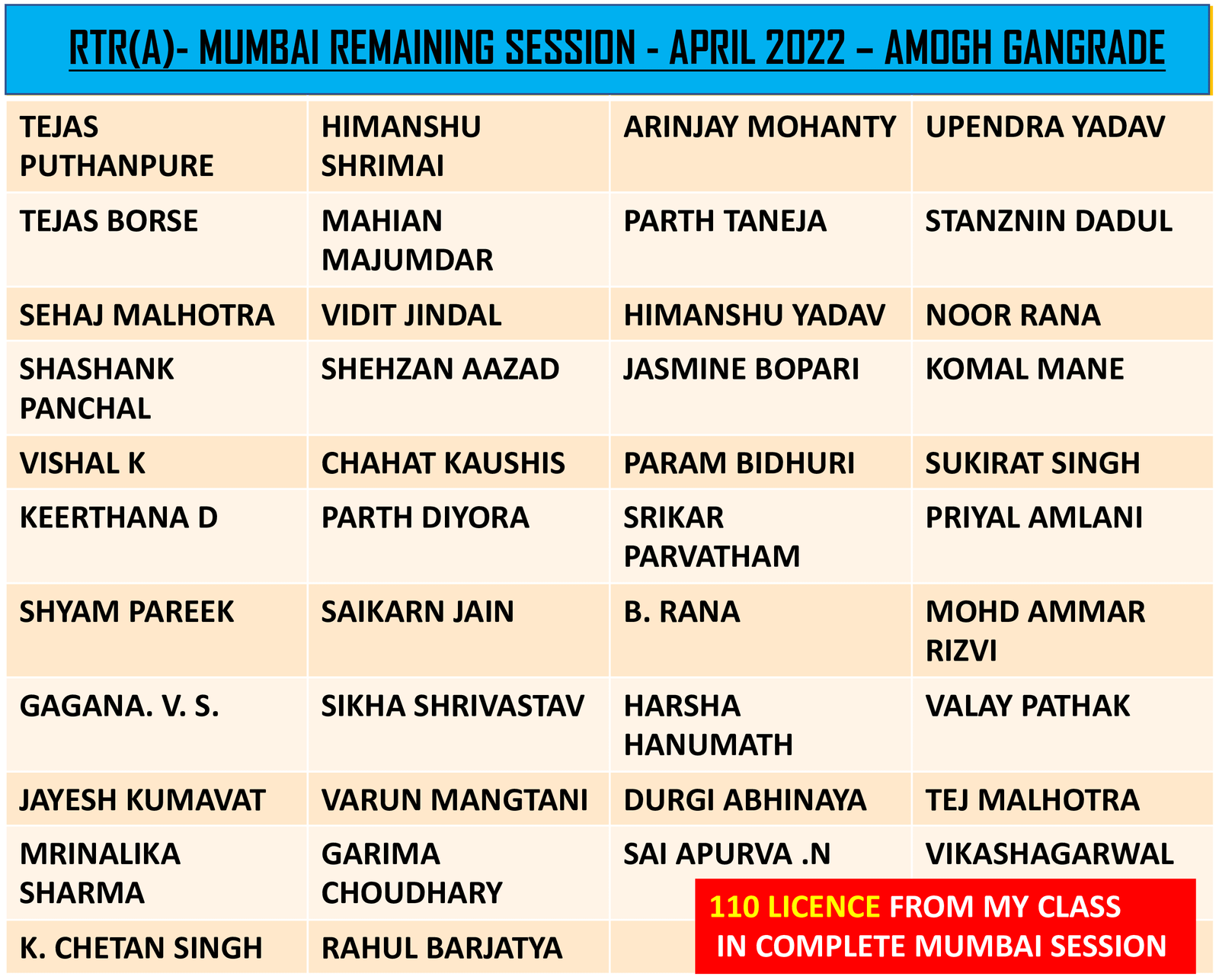
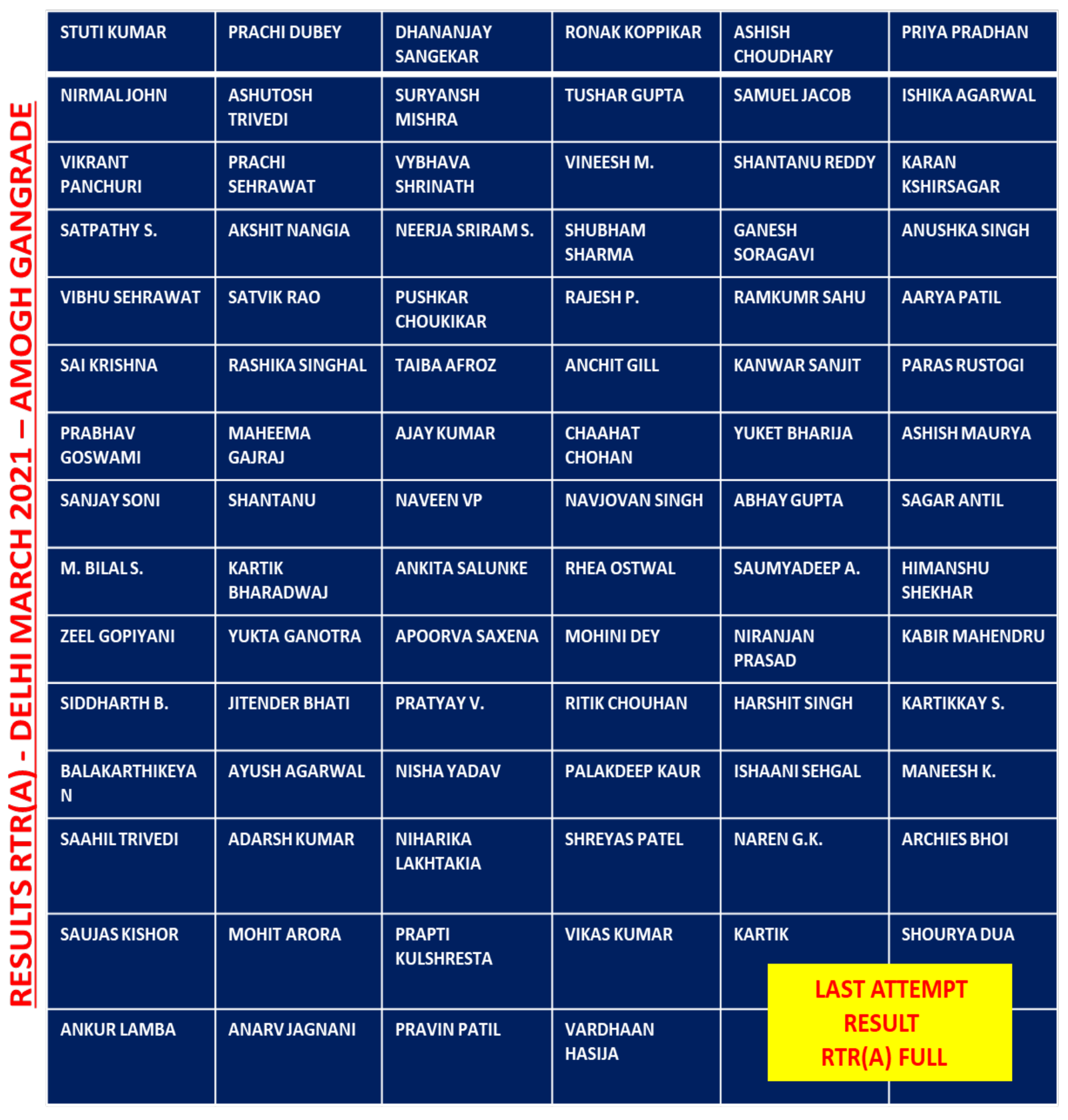
Student result screenshots from previous RTR(A) sessions. Select an image to view it at full size.

RTR(A) Student Result 1 RTR(A) Student Result 2 RTR(A) Student Result 3 RTR(A) Student Result 4 RTR(A) Student Result 5 RTR(A) Student Result 6
FAQ

Common RTR(A) Questions

What are the passing marks for Part 1 and Part 2?

Part 1: 70% (35 of 50 MCQs), without negative marking. Part 2: 50% (50 of 100 marks) for the practical/oral assessment. Confirm the applicable session instructions on the official DGCA portal.

Who conducts the RTR(A) examination now?

From Regular Session 04 of 2025 (December) onwards, the RTR(A) examination is conducted by the Directorate General of Civil Aviation (DGCA), Government of India.

What is tested in Part I?

Part I is a computer-based written test of 50 MCQs. A minimum of 35 correct answers (70%) is required; there is no negative marking.

What is tested in Part II?

Part II is a simulated practical/oral viva covering ATC transmissions, readbacks and flight scenarios. The stated minimum passing score is 50 out of 100 (50%).

Where can I confirm current exam dates?

Use the latest notice on the DGCA Pariksha Portal. Examination dates, application windows, centres and administrative instructions can change.

Do you provide RTR(A) classes?

Yes. Use the WhatsApp enquiry button below to ask about the current batch, class format and preparation support.

Preparing for RTR(A)?

Ask about the current batch, Part I MCQ practice and Part II practical preparation.

WhatsApp Us

AME Question Paper is an independent educational website. Always verify current RTR(A) rules, examination notices, fees, application procedures, centres and schedules through the official DGCA Pariksha Portal.

Create New Account!

Fill the forms below to register

Retrieve your password

Please enter your username or email address to reset your password.