✈

Welcome to AME QUESTION PAPER

Sign in to access your study materials, mock tests and more.

Login with Google

Sign in with Google. New users get an account automatically.

G Sign up with Google

New user? Create your account with Google.

Login / Sign Up with Email

✈
AME QUESTION PAPER
www.amequestionpaper.in
Skip to content
✈ India's AME Exam Preparation Platform Serving AME Students Since 2017
Premium Study Material WhatsApp Support Contact
AME Question Paper
Home
📘 DGCA Question Papers Previous papers & short notes ⭐ Premium Study Material Premium DGCA AME modules 📚 AME Reference Books Recommended reference material 🌐 EASA Papers & Notes EASA examination resources
Mock Tests RTR(A) Jobs News Blogs
⌕ Login / Sign Up
Premium Study Material
Home 📘 DGCA Question Papers & Notes ⭐ Premium Study Material 🎯 Premium Mock Tests 📚 AME Reference Books 🎙 RTR(A) 💼 Aviation Jobs 📰 Aviation News ✍ Blogs Login / Sign Up

What’s With the Smell Inside Commercial Airplanes?

November 20, 2026
in Blogs
A A
Are Commercial Airline Seats Too Small?

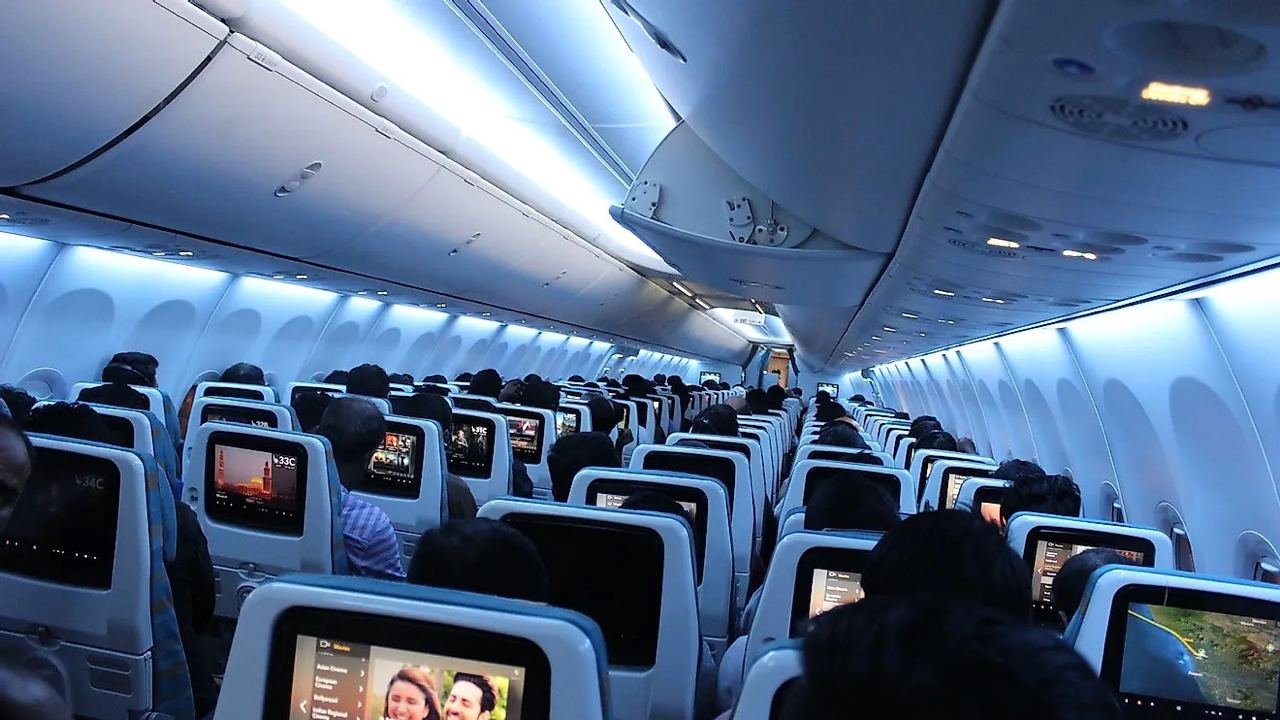
Have you ever walked aboard a commercial airplane, only to discover a distinct smell inside the cabin? Well, you aren’t alone. While there are dozens of different types of commercial airplanes, many of them share a similar smell. It’s a musky, somewhat unpleasant smell that many people associate with flying. In this post, we’re going to reveal why commercial airplanes have this distinct smell.

Jet Fuel

The distinct smell inside commercial airplanes is often attributed to jet fuel. During flight, commercial airplanes burn a mixture of jet fuel and oxygen in their engines to produce propulsion. When jet fuel burns, it creates odorous vapors that may enter the cabin. Commercial airplanes often suck in air from outside. If the air contains fuel vapor, it will likely smell. This is just one of many potential reasons why commercial airplanes smell.

Stale Air

Commercial airplanes don’t circulate fresh air in the cabin. Instead, they recirculate the same air by running it through filters. While the filters catch some of the odor-causing compounds, they don’t catch them all. As these odor-causing compounds accumulate in the air, it can create a distinct smell that resonates through the cabin.

Food and Beverages

Of course, the smell inside commercial airplanes could be the result of food and beverages. Most commercial airlines offer food and beverages to their customers. Coffee, for instance, is frequently served to passengers. And with its strong smell, coffee can leave a unique odor in the cabin. Airplanes also serve food, which depending on the type, may create a unique odor as well. Regardless, food and beverages are often an underlying factor in the distinct smell aboard commercial airplanes.

Insecticide

You might be surprised to learn that some commercial airplanes are treated with insecticide. Known as aircraft disinsection, it’s designed to eliminate insects and other pests that could otherwise carry diseases during international flights. Commercial airlines will treat both the interior and exterior of their airplanes with insecticide. The insecticide products used for aircraft disinsection are generally safe for passengers. They can, however, leave a lingering odor.

It’s important to note that not all commercial airplanes suffer from bad odors. Some airlines go great lengths to create a pleasant cabin environment that’s devoid of bad odors. If you discover a musky odor when flying, though, it could be attributed to one of the four following things: jet fuel, stale air, food and beverages, or insecticide.
Related Posts

AMOS APN Finder
Blogs

AMOS APN Finder

November 20, 2026
MEL Calculator
Blogs

MEL Calculator

November 20, 2026
Blogs

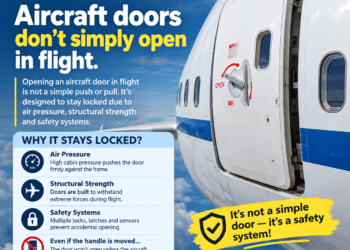
WHY DON’T AIRCRAFT DOORS SIMPLY OPEN IN FLIGHT?

November 20, 2026
Why airplane windows have tiny holes?
Blogs

Why airplane windows have tiny holes?

November 20, 2026
Why airplane windows have tiny holes?
Blogs

Why Your Ears Pop When Flying in an Airplane

November 20, 2026
How the Wings of an Airplane Generate Lift
Blogs

How the Wings of an Airplane Generate Lift

November 20, 2026

Preparing for DGCA AME exams?

Previous year papers, B1 & B2 notes and DGCA-pattern mock tests – all in one place.

Take a Mock Test DGCA Question Papers & Notes
AME QUESTION PAPER

India's first online platform for AME candidates, serving students since 2017 with quality study material for DGCA and EASA exams.

11,75,112 Global visitors
Since 2017 Serving AME students

Study Resources

  • DGCA Papers & Notes
  • Mock Tests
  • EASA Papers & Notes
  • AME Reference Books
  • RTR(A) Classes
  • Members' Results

Quick Links

  • Home
  • About Us
  • Aviation Jobs
  • Aviation News
  • Blogs
  • My Dashboard

Help & Policies

  • Contact Us
  • Terms & Conditions
  • Privacy Policy
  • Refunds & Cancellations
  • Disclaimer

Get in Touch

  • WhatsApp Support +91 75593 69412
  • Support support@amequestionpaper.in
© 2017–2026 AME QUESTION PAPER. All rights reserved. Design by AME QUESTION PAPER ❤

Ok

Create New Account!

Fill the forms below to register

All fields are required. Log In

Retrieve your password

Please enter your username or email address to reset your password.

Log In
✈
AME QUESTION PAPER Support www.amequestionpaper.in
Hi! 👋 How can we help with your DGCA Exam Preparation?
What do you need help with?
DGCA QUESTION PAPERSMOCK TESTRTR(A) CLASSESGUIDANCE
Start WhatsApp Chat WhatsApp Support: +91 75593 69412
No Result
View All Result
  • Home
  • AME
    • DGCA QUESTION PAPER & NOTES
    • MOCK TEST
    • AME REFERENCE BOOKS
    • EASA QUESTION PAPER & NOTES
  • RTR
  • JOBS
  • News
  • Blogs
  • Login
  • Sign Up

Copyright 2017-2026 © All rights Reserved. Design by AME QUESTION PAPER ❤

Insert/edit link

Enter the destination URL

Or link to existing content

    No search term specified. Showing recent items. Search or use up and down arrow keys to select an item.