✈

Welcome to AME QUESTION PAPER

Sign in to access your study materials, mock tests and more.

Login with Google

Sign in with Google. New users get an account automatically.

G Sign up with Google

New user? Create your account with Google.

Login / Sign Up with Email

✈
AME QUESTION PAPER
www.amequestionpaper.in
Skip to content
✈ India's AME Exam Preparation Platform Serving AME Students Since 2017
Premium Study Material WhatsApp Support Contact
AME Question Paper
Home
📘 DGCA Question Papers Previous papers & short notes ⭐ Premium Study Material Premium DGCA AME modules 📚 AME Reference Books Recommended reference material 🌐 EASA Papers & Notes EASA examination resources
Mock Tests RTR(A) Jobs News Blogs
⌕ Login / Sign Up
Premium Study Material
Home 📘 DGCA Question Papers & Notes ⭐ Premium Study Material 🎯 Premium Mock Tests 📚 AME Reference Books 🎙 RTR(A) 💼 Aviation Jobs 📰 Aviation News ✍ Blogs Login / Sign Up

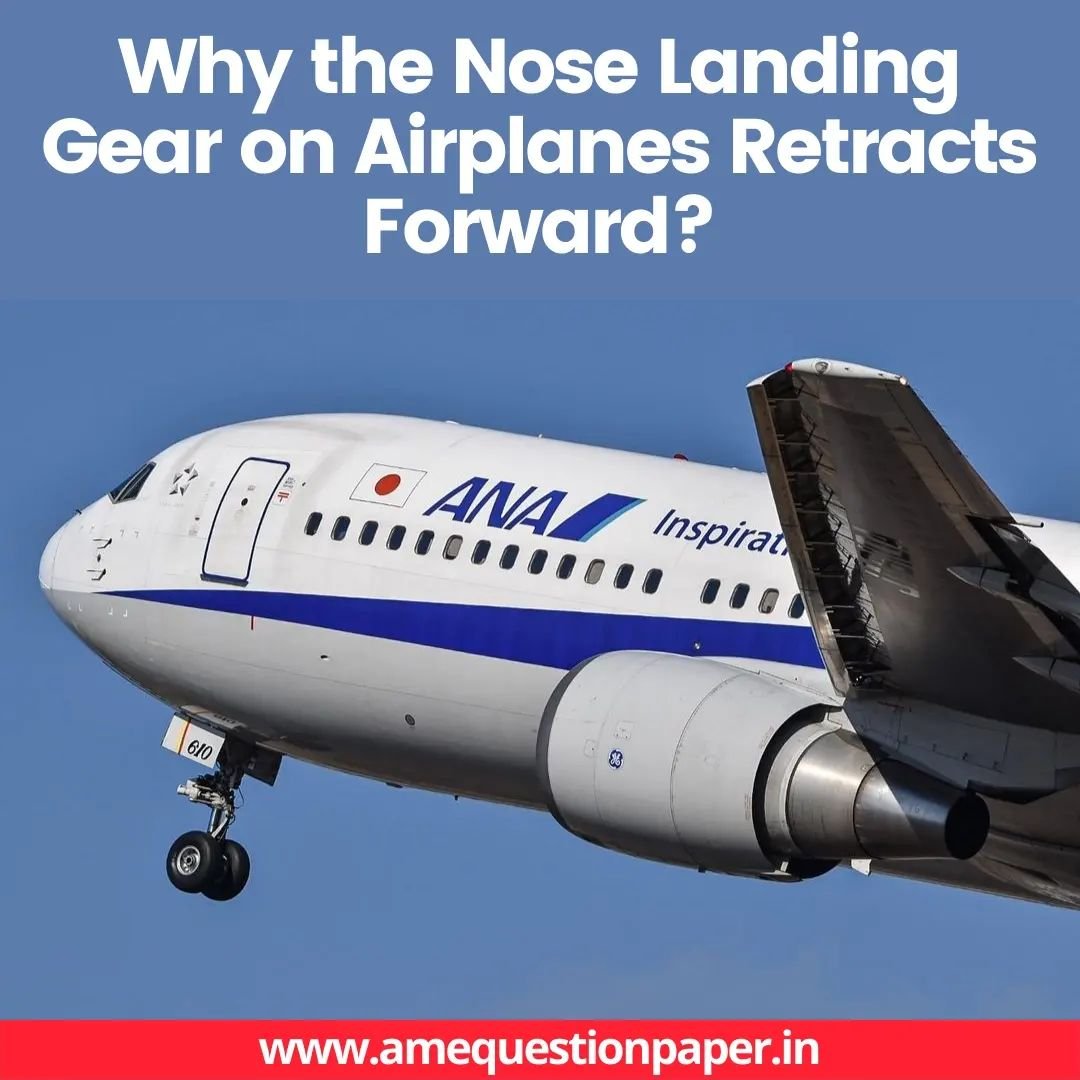
Why the Nose Landing Gear on Airplanes Retracts Forward

May 6, 2022
in Blogs
A A
Why the Nose Landing Gear on Airplanes Retracts Forward

Airplanes rely on landing gear to take off and land. Consisting of wheels connected to a hinge-like system, they are found below the nose and around the wings.

The wheels, of course, are typically retractable. Prior to landing, pilots will lower the airplane’s landing gear. After taking off, on the other hand, they’ll raise the airplane’s landing gear.

If you’ve ever watched an airplane’s landing gear, though, you may recall the nose retracting forward. There are dozens of different setups for landing gear. Nonetheless, the nose landing gear will often retract forward, whereas the rear landing gear around the wings will often retract backward. Why does the nose landing gear retract forward exactly?

👉Weighs Less Than Rear Landing Gear
The nose landing gear typically weighs less than the rear landing gear. There are usually fewer, as well as potentially smaller, wheels below the nose of an airplane than around the wings. Therefore, the nose landing gear weighs less than the rear landing gear.

Because it weighs so much less, the nose landing gear may fail to retract backward. It will be exposed to the wind. Commercial airplanes can fly at speeds of up to 600 miles per hour. As wind strikes the landing gear, it may prevent it from retracting properly — assuming it features a backward-retracting design.

Using forward-retracting landing gear for the nose solves this problem. The wind won’t create resistance. Rather, a forward-retracting design means that the wind will help to lower the landing gear.

👉Acts as a Failsafe
With a forward-retracting design, the nose landing gear isn’t reliant on hydraulic pressure. Both the front and rear landing gear use hydraulic pressure to retract. They are connected to a hinge-like system that’s powered by pressurized gas or air. Hydraulic systems such as this can fail, however. Even if the nose landing gear loses hydraulic pressure, pilots can lower it if it features a forward-retracting design.


Related Posts

AMOS APN Finder
Blogs

AMOS APN Finder

October 16, 2026
MEL Calculator
Blogs

MEL Calculator

October 16, 2026
Blogs

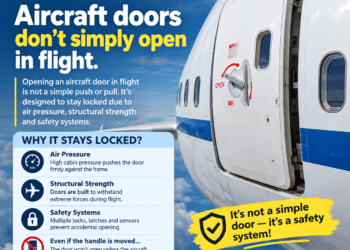
WHY DON’T AIRCRAFT DOORS SIMPLY OPEN IN FLIGHT?

September 7, 2026
Why airplane windows have tiny holes?
Blogs

Why airplane windows have tiny holes?

September 7, 2026
Why airplane windows have tiny holes?
Blogs

Why Your Ears Pop When Flying in an Airplane

September 7, 2026
How the Wings of an Airplane Generate Lift
Blogs

How the Wings of an Airplane Generate Lift

September 7, 2026

Preparing for DGCA AME exams?

Previous year papers, B1 & B2 notes and DGCA-pattern mock tests – all in one place.

Take a Mock Test DGCA Question Papers & Notes
AME QUESTION PAPER

India's first online platform for AME candidates, serving students since 2017 with quality study material for DGCA and EASA exams.

11,75,112 Global visitors
Since 2017 Serving AME students

Study Resources

  • DGCA Papers & Notes
  • Mock Tests
  • EASA Papers & Notes
  • AME Reference Books
  • RTR(A) Classes
  • Members' Results

Quick Links

  • Home
  • About Us
  • Aviation Jobs
  • Aviation News
  • Blogs
  • My Dashboard

Help & Policies

  • Contact Us
  • Terms & Conditions
  • Privacy Policy
  • Refunds & Cancellations
  • Disclaimer

Get in Touch

  • WhatsApp Support +91 75593 69412
  • Support support@amequestionpaper.in
© 2017–2026 AME QUESTION PAPER. All rights reserved. Design by AME QUESTION PAPER ❤

Ok

Create New Account!

Fill the forms below to register

All fields are required. Log In

Retrieve your password

Please enter your username or email address to reset your password.

Log In
✈
AME QUESTION PAPER Support www.amequestionpaper.in
Hi! 👋 How can we help with your DGCA Exam Preparation?
What do you need help with?
DGCA QUESTION PAPERSMOCK TESTRTR(A) CLASSESGUIDANCE
Start WhatsApp Chat WhatsApp Support: +91 75593 69412
No Result
View All Result
  • Home
  • AME
    • DGCA QUESTION PAPER & NOTES
    • MOCK TEST
    • AME REFERENCE BOOKS
    • EASA QUESTION PAPER & NOTES
  • RTR
  • JOBS
  • News
  • Blogs
  • Login
  • Sign Up

Copyright 2017-2026 © All rights Reserved. Design by AME QUESTION PAPER ❤

Insert/edit link

Enter the destination URL

Or link to existing content

    No search term specified. Showing recent items. Search or use up and down arrow keys to select an item.