✈

Welcome to AME QUESTION PAPER

Sign in to access your study materials, mock tests and more.

Login with Google

Sign in with Google. New users get an account automatically.

G Sign up with Google

New user? Create your account with Google.

Login / Sign Up with Email

✈
AME QUESTION PAPER
www.amequestionpaper.in
Skip to content
✈ India's AME Exam Preparation Platform Serving AME Students Since 2017
Premium Study Material WhatsApp Support Contact
AME Question Paper
Home
📘 DGCA Question Papers Previous papers & short notes ⭐ Premium Study Material Premium DGCA AME modules 📚 AME Reference Books Recommended reference material 🌐 EASA Papers & Notes EASA examination resources
Mock Tests RTR(A) Jobs News Blogs
⌕ Login / Sign Up
Premium Study Material
Home 📘 DGCA Question Papers & Notes ⭐ Premium Study Material 🎯 Premium Mock Tests 📚 AME Reference Books 🎙 RTR(A) 💼 Aviation Jobs 📰 Aviation News ✍ Blogs Login / Sign Up

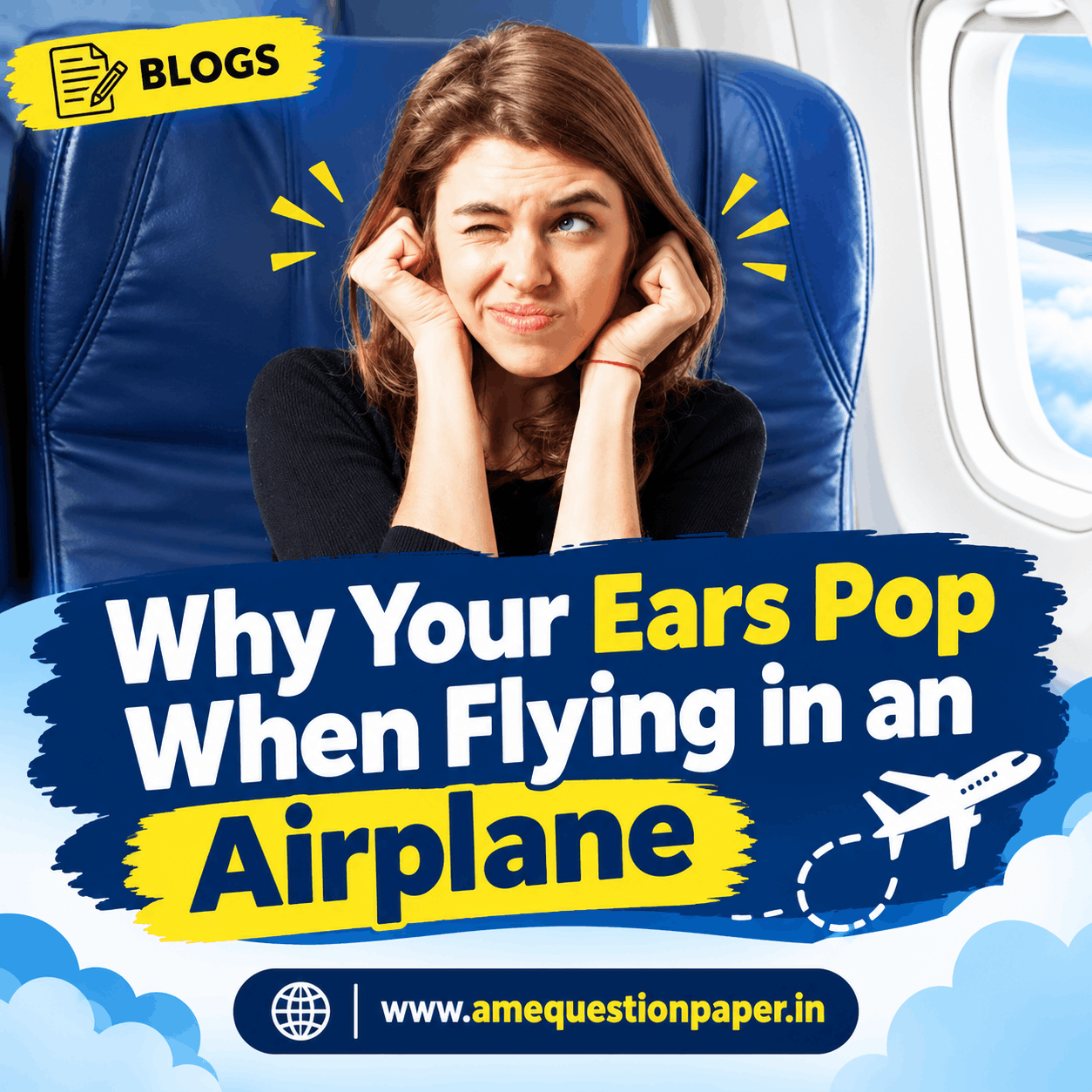
Why Your Ears Pop When Flying in an Airplane

November 20, 2026
in Blogs
A A
Why airplane windows have tiny holes?

It’s not uncommon for passengers to hear — and feel — a slight “pop” in their ears when flying in an airplane. Of course, this isn’t limited strictly to flying; it occurs at all high altitudes, including driving across mountings. But what exactly causes your ears to pop? And is there anything you can do to prevent it?

As previously mentioned, your ears pop when flying because of the change in altitude. When you’re on land, the air pressure on your right and left eardrums are equal. Air passes through the canal (Eustachian tube) without interruption. When you’re flying at a high altitude, however, the air pressure in unequal, which causes pain and pressure in the ears.

There are a few things you can do to ease the pressure and discomfort associated with popping ears when flying. First and foremost, try swallowing or chewing gum during takeoff. According to r. Carl Philpott, swallowing opens the Eustachian tube within your ears; thus, relieving pressure. Chewing gum is perhaps the most effective method, however, as it constantly forces the tube to open. This is why many seasoned air travelers chew gum during takeoff.

Additionally, Dr. Philpott recommends taking a nasal decongestant if you experience sinus problems. Travelers who are suffering from a cold or other upper-respiratory infection are more likely to experience pain in their ears. With an infection such as this, the Eustachian tube becomes more narrow; thus, making it more susceptible to pressure caused by high altitudes.

“People with active problems with swelling in ears and nose will be more adversely affected. The lining in the nose and sinuses and tubes is the same throughout, and swelling can affect all of that,” explained Dr. Philpott of the Norwich Medical School at the University of East Anglia in England.

Finally, Dr. Philpott recommends a technique known as the Valsalva, which involves pinching your nose shut, inhaling air through your mouth and then blowing out through your nose. You can do this during takeoff or landing to relieve pressure. When performing correctly, the Valsalva should trigger a light popping noise as your ears become unblocked.

The key thing to remember is that ear popping is caused by unequal pressure associated with high-altitude flying. When you fly, the pressure squeezes the inside of your ears and sinuses, causing pain. You may be able to relieve the discomfort, however,  by chewing gum or swallowing.
Related Posts

AMOS APN Finder
Blogs

AMOS APN Finder

November 20, 2026
MEL Calculator
Blogs

MEL Calculator

November 20, 2026
Blogs

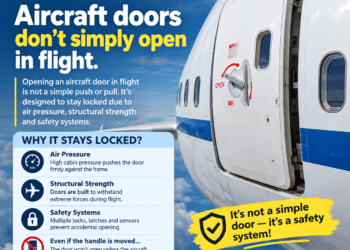
WHY DON’T AIRCRAFT DOORS SIMPLY OPEN IN FLIGHT?

November 20, 2026
Why airplane windows have tiny holes?
Blogs

Why airplane windows have tiny holes?

November 20, 2026
How the Wings of an Airplane Generate Lift
Blogs

How the Wings of an Airplane Generate Lift

November 20, 2026
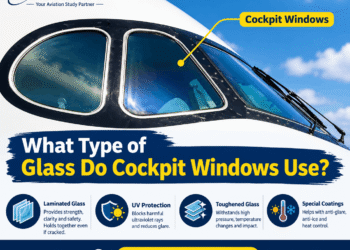
What Type of Glass Do Cockpit Windows Use?
Blogs

What Type of Glass Do Cockpit Windows Use?

November 20, 2026

Preparing for DGCA AME exams?

Previous year papers, B1 & B2 notes and DGCA-pattern mock tests – all in one place.

Take a Mock Test DGCA Question Papers & Notes
AME QUESTION PAPER

India's first online platform for AME candidates, serving students since 2017 with quality study material for DGCA and EASA exams.

11,75,112 Global visitors
Since 2017 Serving AME students

Study Resources

  • DGCA Papers & Notes
  • Mock Tests
  • EASA Papers & Notes
  • AME Reference Books
  • RTR(A) Classes
  • Members' Results

Quick Links

  • Home
  • About Us
  • Aviation Jobs
  • Aviation News
  • Blogs
  • My Dashboard

Help & Policies

  • Contact Us
  • Terms & Conditions
  • Privacy Policy
  • Refunds & Cancellations
  • Disclaimer

Get in Touch

  • WhatsApp Support +91 75593 69412
  • Support support@amequestionpaper.in
© 2017–2026 AME QUESTION PAPER. All rights reserved. Design by AME QUESTION PAPER ❤

Ok

Create New Account!

Fill the forms below to register

All fields are required. Log In

Retrieve your password

Please enter your username or email address to reset your password.

Log In
✈
AME QUESTION PAPER Support www.amequestionpaper.in
Hi! 👋 How can we help with your DGCA Exam Preparation?
What do you need help with?
DGCA QUESTION PAPERSMOCK TESTRTR(A) CLASSESGUIDANCE
Start WhatsApp Chat WhatsApp Support: +91 75593 69412
No Result
View All Result
  • Home
  • AME
    • DGCA QUESTION PAPER & NOTES
    • MOCK TEST
    • AME REFERENCE BOOKS
    • EASA QUESTION PAPER & NOTES
  • RTR
  • JOBS
  • News
  • Blogs
  • Login
  • Sign Up

Copyright 2017-2026 © All rights Reserved. Design by AME QUESTION PAPER ❤

Insert/edit link

Enter the destination URL

Or link to existing content

    No search term specified. Showing recent items. Search or use up and down arrow keys to select an item.