





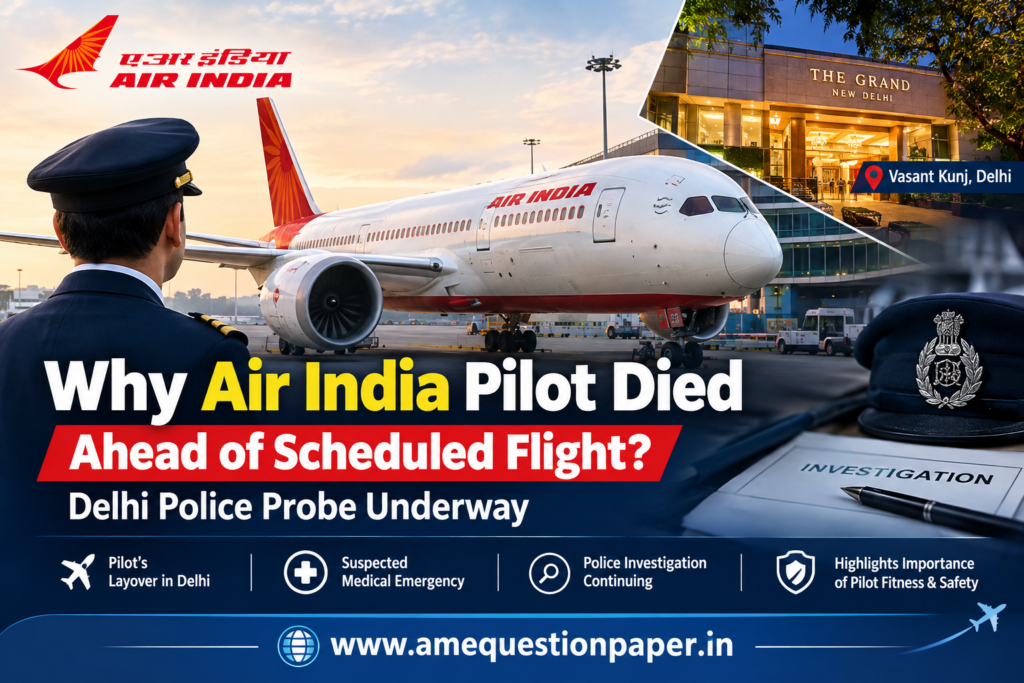
New Delhi: An Air India pilot died in Delhi while on a scheduled layover, shortly before he was due to operate his next flight. The incident occurred at a hotel in Vasant Kunj on September 11, 2026, and Delhi Police has begun an investigation into the circumstances surrounding his death.
The pilot was identified in media reports as Captain Sunny Asladekar, who was in his 40s. He had reportedly been staying at The Grand hotel in Vasant Kunj as part of his operational and training schedule.
Pilot Found Unresponsive During Delhi Layover
According to reports, Captain Asladekar had checked into the hotel on September 10. He was subsequently found unconscious inside his room on the evening of September 11.
Concern arose after his brother was unable to contact him. Hotel staff were alerted and found the room locked from inside. The door was opened using a master key, after which the pilot was found unresponsive.
He was immediately taken to a hospital, where he was declared brought dead. Delhi Police was informed and initiated proceedings to establish the circumstances of the death.
Pilot Was Scheduled to Fly the Following Morning
The incident occurred during a scheduled rest period before the pilot’s next assignment. Reports indicate that he was scheduled to operate a flight early on Saturday morning.
The circumstances are significant from an aviation-operations perspective because airline pilots must meet strict medical fitness, fatigue-management and operational-readiness requirements before being assigned flight duties.
The pilot had previously been associated with Air India Express and had moved to Air India a few months earlier, according to reports.
Boeing 787 Conversion Training
Reports also indicate that Captain Asladekar was undergoing conversion training for the Boeing 787.
Transitioning between aircraft types is a structured process. Pilots require appropriate type-specific training and competency assessment before operating a different aircraft type. The Boeing 787 is a wide-body, long-haul aircraft with flight-deck systems, procedures and operating characteristics that require dedicated training.
For aviation students and AME professionals, this highlights an important principle of commercial aviation: aircraft-specific competency and crew fitness are essential components of flight safety.
What Is Known About the Cause of Death?
At this stage, the circumstances should not be confused with an established aviation accident or an aircraft-related technical event.
An airline statement reported that the pilot was found unconscious during his hotel layover and was taken to hospital, where he was declared dead. Some reports have cited cardiac arrest as the suspected or reported medical cause. However, Delhi Police has continued its investigation and the post-mortem process is important in establishing the official cause of death.
Therefore, any definitive conclusion about the cause of death should await the appropriate medical and investigative findings.
Delhi Police Investigation Underway
Delhi Police has examined the circumstances at the hotel and initiated the necessary legal proceedings. A crime team reportedly inspected the scene, while a post-mortem examination was conducted at Safdarjung Hospital.
Investigators are expected to establish the sequence of events, examine available evidence and await medical findings before determining the circumstances surrounding the death.
Aviation Safety Significance
Although the incident did not involve an aircraft in flight, it highlights an important aspect of aviation safety: pilot fitness is a critical part of the overall safety system.
Airline operations depend not only on aircraft serviceability and maintenance but also on the physical and mental fitness of flight crew. Airlines therefore operate within regulatory frameworks covering areas such as:
- Pilot medical fitness
- Fatigue risk management
- Rest and duty-time requirements
- Pre-flight fitness assessment
- Crew scheduling
- Training and competency checks
- Operational readiness
For Aircraft Maintenance Engineers (AMEs) and aviation students, the incident is a reminder that aviation safety is a multidisciplinary system. Aircraft maintenance, engineering controls, flight operations, crew training, medical fitness and regulatory oversight all contribute to safe operations.
Air India’s Response
Air India expressed sadness over the death of its cockpit crew member and said it was in contact with the pilot’s family and providing support during the difficult period.
The airline’s operational arrangements would also need to ensure that flight duties are assigned only to appropriately qualified and medically fit crew members.
Conclusion
The death of an Air India pilot during a Delhi layover, shortly before his scheduled flight, has prompted a police investigation and medical examination. While reports have pointed toward a medical emergency, the official findings will be important before a definitive cause can be established.
The incident also underscores a fundamental aviation-safety principle: safe flight operations depend not only on aircraft reliability and maintenance but equally on the fitness, training and readiness of the people operating the aircraft.
:::


