✈

Welcome to AME QUESTION PAPER

Sign in to access your study materials, mock tests and more.

Login with Google

Sign in with Google. New users get an account automatically.

G Sign up with Google

New user? Create your account with Google.

Login / Sign Up with Email

✈
AME QUESTION PAPER
www.amequestionpaper.in
Skip to content
✈ India's AME Exam Preparation Platform Serving AME Students Since 2017
Premium Study Material WhatsApp Support Contact
AME Question Paper
Home
📘 DGCA Question Papers Previous papers & short notes ⭐ Premium Study Material Premium DGCA AME modules 📚 AME Reference Books Recommended reference material 🌐 EASA Papers & Notes EASA examination resources
Mock Tests RTR(A) Jobs News Blogs
⌕ Login / Sign Up
Premium Study Material
Home 📘 DGCA Question Papers & Notes ⭐ Premium Study Material 🎯 Premium Mock Tests 📚 AME Reference Books 🎙 RTR(A) 💼 Aviation Jobs 📰 Aviation News ✍ Blogs Login / Sign Up

What Is a ‘Yaw’ Motion in Airplanes?

May 7, 2022
in Blogs
A A
Why Do Airplanes Have Swept Wings?

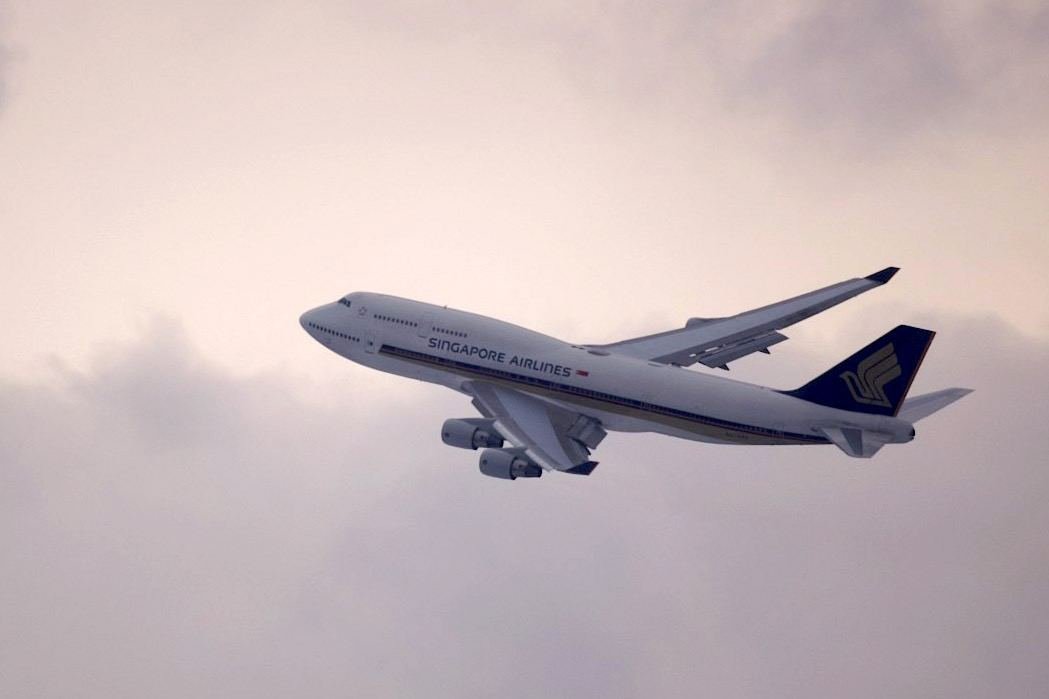
Airplanes have revolutionized the way in which we travel. At any given time, there are approximately 10,000 to 20,000 airplanes traversing the skies. Although there are many different types of airplanes, they all operate on several laws of motion. While you might be familiar with roll and pitch, a law of motion that often goes unnoticed is yaw. So, what is yaw, and how does it affect airplanes’ ability to fly and maneuver?

Overview of Yaw

A yaw motion refers to the horizontal movement of an airplane’s nose. It’s essentially used to turn an airplane in a different direction. Like most vehicles, including cars and trucks, airplanes must turn to change the direction. Airplanes rely on a yaw movement to perform such turns that allow them to change the direction in which they fly.

Airplanes have an axis on which yaw movements are performed. Known as a yaw axis, it runs perpendicular to the airplane’s wings. The yaw axis is basically a straight line that starts at the nose of the airplane and stops at the tail of the airplane. When an airplane turns, it will rotate along its yaw axis.

How Yaw Is Controlled

Yaw is controlled via the rudder. If you look at the tail of a typical airplane, you’ll notice a flap on each side. These flaps encompass the airplane’s rudder, and pilots can control them to perform a yaw movement. When a pilot wants to change direction, he or she will engage the rudder. The rudder flap will rise up, thereby allowing the airplane to rotate along its yaw axis

Along with the rudder, pilots can perform a yaw movement by engaging the ailerons. The ailerons and rudder both provide a method of controlling the direction in which airplanes fly.

Yaw vs Pitch and Roll

Airplanes have three basic movements during flight: yaw, pitch and roll. Pitch refers to the side-to-side movement, whereas roll refers to the front-to-back movement. In comparison, yaw is a rotational movement that allows airplanes to turn and change direction. All airplanes operate using these three basic movements.

In Conclusion

To recap, yaw a rotational movement that’s used to turn an airplane in a different direction. It’s performed by engaging the rudder and ailerons. When engaged, the airplane will rotate along its yaw axis, which runs perpendicular to the airplane’s wings. As the airplane turns, its nose will change direction. Hopefully, this gives you a better understanding of the yaw motion in airplanes.
Related Posts

AMOS APN Finder
Blogs

AMOS APN Finder

November 11, 2026
MEL Calculator
Blogs

MEL Calculator

October 16, 2026
Blogs

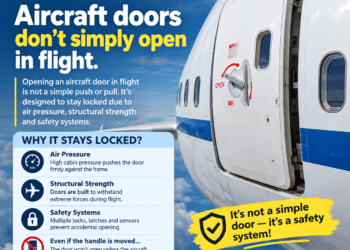
WHY DON’T AIRCRAFT DOORS SIMPLY OPEN IN FLIGHT?

September 7, 2026
Why airplane windows have tiny holes?
Blogs

Why airplane windows have tiny holes?

September 7, 2026
Why airplane windows have tiny holes?
Blogs

Why Your Ears Pop When Flying in an Airplane

September 7, 2026
How the Wings of an Airplane Generate Lift
Blogs

How the Wings of an Airplane Generate Lift

September 7, 2026

Preparing for DGCA AME exams?

Previous year papers, B1 & B2 notes and DGCA-pattern mock tests – all in one place.

Take a Mock Test DGCA Question Papers & Notes
AME QUESTION PAPER

India's first online platform for AME candidates, serving students since 2017 with quality study material for DGCA and EASA exams.

11,75,112 Global visitors
Since 2017 Serving AME students

Study Resources

  • DGCA Papers & Notes
  • Mock Tests
  • EASA Papers & Notes
  • AME Reference Books
  • RTR(A) Classes
  • Members' Results

Quick Links

  • Home
  • About Us
  • Aviation Jobs
  • Aviation News
  • Blogs
  • My Dashboard

Help & Policies

  • Contact Us
  • Terms & Conditions
  • Privacy Policy
  • Refunds & Cancellations
  • Disclaimer

Get in Touch

  • WhatsApp Support +91 75593 69412
  • Support support@amequestionpaper.in
© 2017–2026 AME QUESTION PAPER. All rights reserved. Design by AME QUESTION PAPER ❤

Ok

Create New Account!

Fill the forms below to register

All fields are required. Log In

Retrieve your password

Please enter your username or email address to reset your password.

Log In
✈
AME QUESTION PAPER Support www.amequestionpaper.in
Hi! 👋 How can we help with your DGCA Exam Preparation?
What do you need help with?
DGCA QUESTION PAPERSMOCK TESTRTR(A) CLASSESGUIDANCE
Start WhatsApp Chat WhatsApp Support: +91 75593 69412
No Result
View All Result
  • Home
  • AME
    • DGCA QUESTION PAPER & NOTES
    • MOCK TEST
    • AME REFERENCE BOOKS
    • EASA QUESTION PAPER & NOTES
  • RTR
  • JOBS
  • News
  • Blogs
  • Login
  • Sign Up

Copyright 2017-2026 © All rights Reserved. Design by AME QUESTION PAPER ❤

Insert/edit link

Enter the destination URL

Or link to existing content

    No search term specified. Showing recent items. Search or use up and down arrow keys to select an item.