✈

Welcome to AME QUESTION PAPER

Sign in to access your study materials, mock tests and more.

Login with Google

Sign in with Google. New users get an account automatically.

G Sign up with Google

New user? Create your account with Google.

Login / Sign Up with Email

✈
AME QUESTION PAPER
www.amequestionpaper.in
Skip to content
✈ India's AME Exam Preparation Platform Serving AME Students Since 2017
Premium Study Material WhatsApp Support Contact
AME Question Paper
Home
📘 DGCA Question Papers Previous papers & short notes ⭐ Premium Study Material Premium DGCA AME modules 📚 AME Reference Books Recommended reference material 🌐 EASA Papers & Notes EASA examination resources
Mock Tests RTR(A) Jobs News Blogs
⌕ Login / Sign Up
Premium Study Material
Home 📘 DGCA Question Papers & Notes ⭐ Premium Study Material 🎯 Premium Mock Tests 📚 AME Reference Books 🎙 RTR(A) 💼 Aviation Jobs 📰 Aviation News ✍ Blogs Login / Sign Up

What Is the ‘Six Pack’ In Airplane Cockpits?

May 7, 2022
in Blogs
A A
What Is the ‘Six Pack’ In Airplane Cockpits?

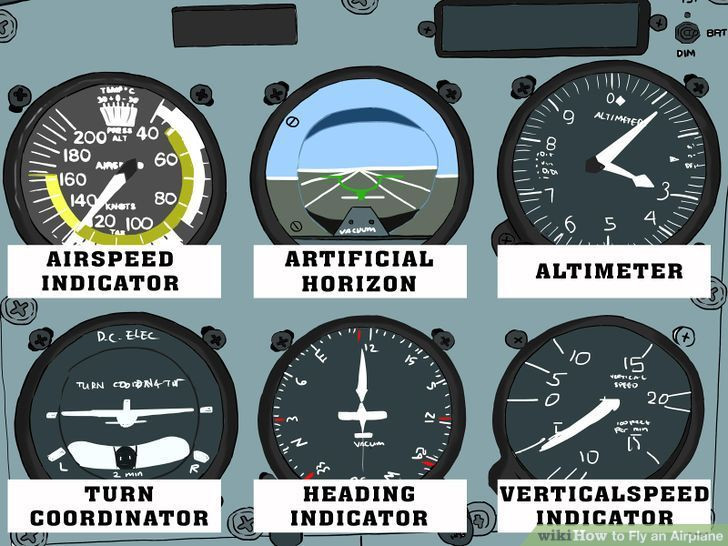
The cockpit is one of the most important parts of an airplane. Located within the nose, it contains an array of operational and communications control systems. Pilots will enter the cockpit where they are able to use these controls. While cockpits contain dozens of instruments, however, some are more important than others. There are six instruments of particular importance. Known as the “six pack,” they are found in the cockpits of nearly all airplanes.

#1) Airspeed Indicator

One of the instruments in the six pack is the airspeed indicator. It’s the equivalent of a speedometer for airplanes. The airspeed indicator shows how fast the airplane is moving through the air. In most cockpits, the airspeed indicator is found in the upper-left corner of the six pack instrumental panel.

#2) Altitude Indicator

Next to the airspeed indicator is the altitude indicator. Also known as the artificial horizon, it shows the orientation of the airplane. Pilots can check the altitude indicator to determine whether they are flying parallel to the Earth’s, or if not, the degree to which they are not.

#3) Altimeter

Another instrument in the six pack is the altimeter. The altimeter reveals the airplane’s altitude. It specifically shows the height at which the airplane is flying above mean sea level. In most airplane cockpits, the six pack consists of two rows with gauges each. The altimeter is the last gauge on the far right side of the top row.

#4) Vertical Speed Indicator

There’s also the vertical speed indicator. It’s similar to an airspeed indicator, except it shows the speed at which the airplane is ascending or descending. Pilots use it to ensure that they aren’t ascending or descending too quickly.

#5) Heading Indicator

Within the six-pack is a gauge consisting of a magnetic compass. Known as the heading indicator, it shows the direction in which the airplane is flying. Airplanes, of course, are affected by the wind. Even if an airplane is pointing in the right direction, a strong gust of wind may change its trajectory. The heading indicator allows pilots to maintain the appropriate trajectory so that they stay course.

#6) Turn Coordinator

Finally, there’s the turn coordinator in the six pack. It’s designed to assist pilots with turning the airplane. The turn coordinator contains two parts. One of the parts shows the airplane’s rate of turn. The other part shows the slip or skin of the airplane’s turn.

Related Posts

AMOS APN Finder
Blogs

AMOS APN Finder

October 16, 2026
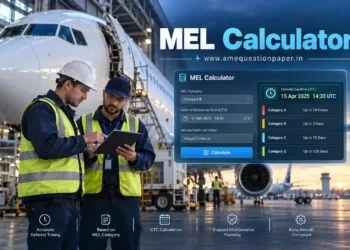
MEL Calculator
Blogs

MEL Calculator

October 16, 2026
Blogs

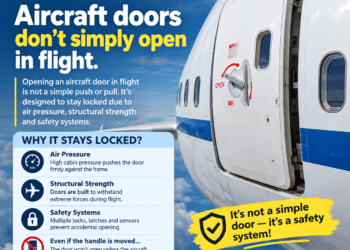
WHY DON’T AIRCRAFT DOORS SIMPLY OPEN IN FLIGHT?

September 7, 2026
Why airplane windows have tiny holes?
Blogs

Why airplane windows have tiny holes?

September 7, 2026
Why airplane windows have tiny holes?
Blogs

Why Your Ears Pop When Flying in an Airplane

September 7, 2026
How the Wings of an Airplane Generate Lift
Blogs

How the Wings of an Airplane Generate Lift

September 7, 2026

Preparing for DGCA AME exams?

Previous year papers, B1 & B2 notes and DGCA-pattern mock tests – all in one place.

Take a Mock Test DGCA Question Papers & Notes
AME QUESTION PAPER

India's first online platform for AME candidates, serving students since 2017 with quality study material for DGCA and EASA exams.

11,75,112 Global visitors
Since 2017 Serving AME students

Study Resources

  • DGCA Papers & Notes
  • Mock Tests
  • EASA Papers & Notes
  • AME Reference Books
  • RTR(A) Classes
  • Members' Results

Quick Links

  • Home
  • About Us
  • Aviation Jobs
  • Aviation News
  • Blogs
  • My Dashboard

Help & Policies

  • Contact Us
  • Terms & Conditions
  • Privacy Policy
  • Refunds & Cancellations
  • Disclaimer

Get in Touch

  • WhatsApp Support +91 75593 69412
  • Support support@amequestionpaper.in
© 2017–2026 AME QUESTION PAPER. All rights reserved. Design by AME QUESTION PAPER ❤

Ok

Create New Account!

Fill the forms below to register

All fields are required. Log In

Retrieve your password

Please enter your username or email address to reset your password.

Log In
✈
AME QUESTION PAPER Support www.amequestionpaper.in
Hi! 👋 How can we help with your DGCA Exam Preparation?
What do you need help with?
DGCA QUESTION PAPERSMOCK TESTRTR(A) CLASSESGUIDANCE
Start WhatsApp Chat WhatsApp Support: +91 75593 69412
No Result
View All Result
  • Home
  • AME
    • DGCA QUESTION PAPER & NOTES
    • MOCK TEST
    • AME REFERENCE BOOKS
    • EASA QUESTION PAPER & NOTES
  • RTR
  • JOBS
  • News
  • Blogs
  • Login
  • Sign Up

Copyright 2017-2026 © All rights Reserved. Design by AME QUESTION PAPER ❤

Insert/edit link

Enter the destination URL

Or link to existing content

    No search term specified. Showing recent items. Search or use up and down arrow keys to select an item.