
✈

Welcome to AME QUESTION PAPER

Sign in to access your study materials, mock tests and more.

Login with Google

Sign in with Google. New users get an account automatically.

G Sign up with Google

New user? Create your account with Google.

Login / Sign Up with Email

✈
AME QUESTION PAPER
www.amequestionpaper.in
Skip to content
✈ India's AME Exam Preparation Platform Serving AME Students Since 2017
Premium Study Material WhatsApp Support Contact
AME Question Paper
Home
📘 DGCA Question Papers Previous papers & short notes ⭐ Premium Study Material Premium DGCA AME modules 📚 AME Reference Books Recommended reference material 🌐 EASA Papers & Notes EASA examination resources
Mock Tests RTR(A) Jobs News Blogs
⌕ Login / Sign Up
Premium Study Material
Home 📘 DGCA Question Papers & Notes ⭐ Premium Study Material 🎯 Premium Mock Tests 📚 AME Reference Books 🎙 RTR(A) 💼 Aviation Jobs 📰 Aviation News ✍ Blogs Login / Sign Up

Cabin Pressurization: How It Works and Why It’s Important for Airplanes

May 7, 2022
in Blogs
A A
How do Airplanes Get Oxygen for the Cabin?

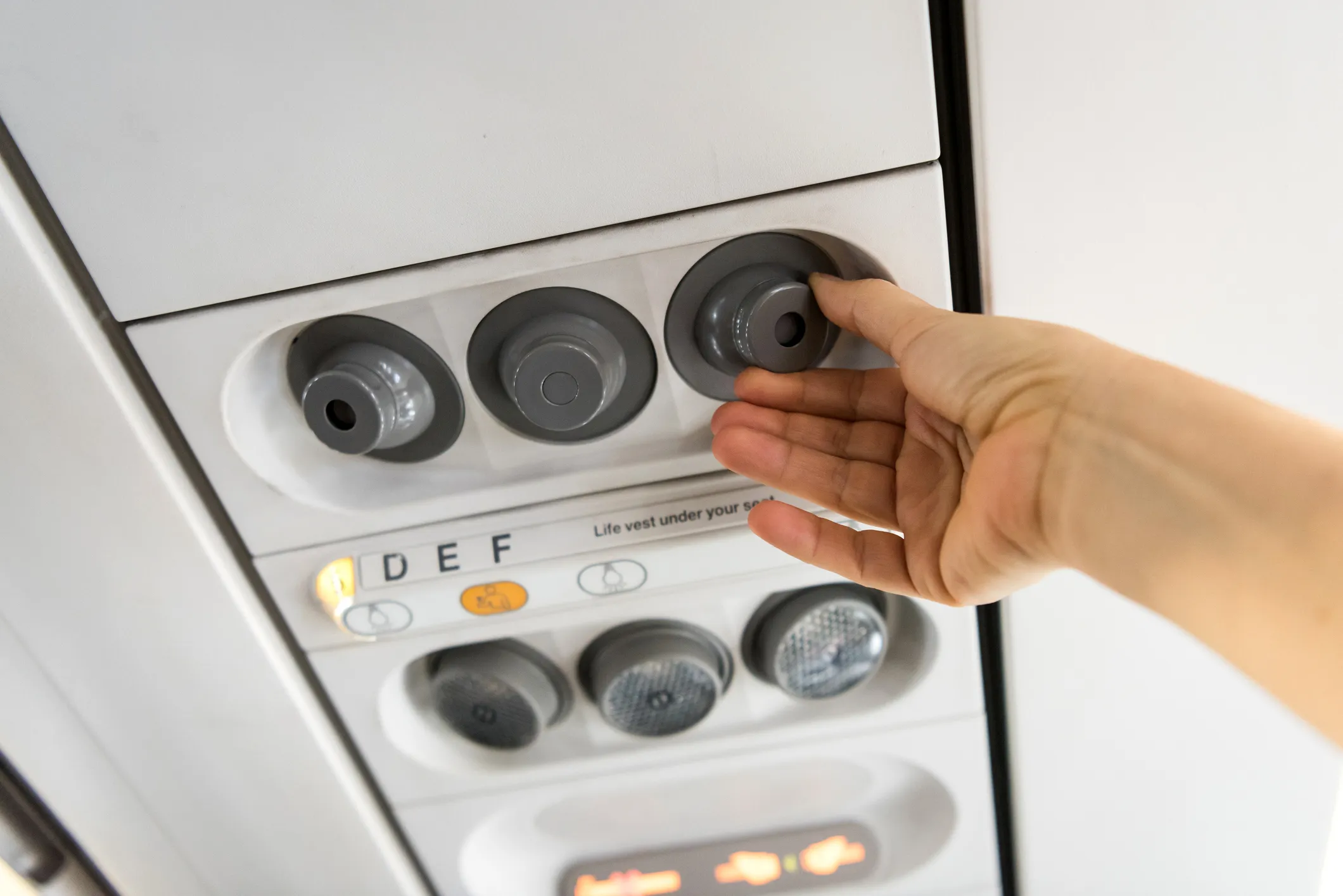
As airplanes ascend higher into the sky, they pump air into the cabin space to pressurize it. All commercial airplanes have pressurized cabins such as this. It doesn’t just create a more comfortable environment for passengers. Rather, cabin pressurization is an important safety feature. So, how does cabin pressurization work, and why is it important for airplanes?

How Airplanes Create Pressurized Cabins

Airplanes pressurize their cabins by pumping air into them. As their jet engines suck in air, some of the excess air is diverted into the airplane’s cabin. The air is both cooled and humidified — meaning moisture is added to it — after which it’s circulated into and throughout the cabin. Once the cabin achieves an ideal pressure level, the airplane will maintain it.

Most airplanes control their cabin pressure via an outflow valve. If an airplane’s cabin exceeds the pressure for which it’s specified, the outflow valve will open. In the open position, excess air will bleed out. The cabin pressure will then drop to an appropriate level, resulting in the outflow valve closing. Some airplanes use other methods to regulate cabin pressure, but most modern-day commercial airplanes rely on an outflow valve for this purpose.

Why Cabin Pressurization Is Important

Cabin pressurization is important because of the nuances between low- and high-altitude air density. Air is less dense at high altitudes than low altitudes. At ground level, the air pressure is a little over 14 pounds per square inch (PSI). When an airplane reaches its typical cruising altitude — usually about 30,000 to 40,000 feet — the air pressure may be just 4 to 5 PSI.

The low air pressure associated with high-altitude flights can restrict passengers from receiving an adequate amount of oxygen unless the cabin is pressurized. Low air pressure means the air is less dense. Therefore, it contains less oxygen. If airplanes didn’t pressurize their cabins, it could lead to insufficient oxygen as well as related medical problems like hypoxia. Airplanes need pressurized cabins because it ensures passengers, as well as crew members, receive an adequate amount of oxygen in the air they breathe.

The good news is that modern-day airplanes are designed with redundancy measures in case of pressurization failure. If an airplane’s cabin loses its pressure, oxygen masks will automatically drop down in front of passengers. Passengers can place one of these oxygen masks over their face to obtain a sufficient amount of oxygen until the airplane descends and lands.


Related Posts

AMOS APN Finder
Blogs

AMOS APN Finder

October 16, 2026
MEL Calculator
Blogs

MEL Calculator

October 16, 2026
Blogs

WHY DON’T AIRCRAFT DOORS SIMPLY OPEN IN FLIGHT?

September 7, 2026
Why airplane windows have tiny holes?
Blogs

Why airplane windows have tiny holes?

September 7, 2026
Why airplane windows have tiny holes?
Blogs

Why Your Ears Pop When Flying in an Airplane

September 7, 2026
How the Wings of an Airplane Generate Lift
Blogs

How the Wings of an Airplane Generate Lift

September 7, 2026

Preparing for DGCA AME exams?

Previous year papers, B1 & B2 notes and DGCA-pattern mock tests – all in one place.

Take a Mock Test DGCA Question Papers & Notes
AME QUESTION PAPER

India's first online platform for AME candidates, serving students since 2017 with quality study material for DGCA and EASA exams.

11,75,112 Global visitors
Since 2017 Serving AME students

Study Resources

  • DGCA Papers & Notes
  • Mock Tests
  • EASA Papers & Notes
  • AME Reference Books
  • RTR(A) Classes
  • Members' Results

Quick Links

  • Home
  • About Us
  • Aviation Jobs
  • Aviation News
  • Blogs
  • My Dashboard

Help & Policies

  • Contact Us
  • Terms & Conditions
  • Privacy Policy
  • Refunds & Cancellations
  • Disclaimer

Get in Touch

  • WhatsApp Support +91 75593 69412
  • Support support@amequestionpaper.in
© 2017–2026 AME QUESTION PAPER. All rights reserved. Design by AME QUESTION PAPER ❤

Ok

Create New Account!

Fill the forms below to register

All fields are required. Log In

Retrieve your password

Please enter your username or email address to reset your password.

Log In
✈
AME QUESTION PAPER Support www.amequestionpaper.in
Hi! 👋 How can we help with your DGCA Exam Preparation?
What do you need help with?
DGCA QUESTION PAPERSMOCK TESTRTR(A) CLASSESGUIDANCE
Start WhatsApp Chat WhatsApp Support: +91 75593 69412
No Result
View All Result
  • Home
  • AME
    • DGCA QUESTION PAPER & NOTES
    • MOCK TEST
    • AME REFERENCE BOOKS
    • EASA QUESTION PAPER & NOTES
  • RTR
  • JOBS
  • News
  • Blogs
  • Login
  • Sign Up

Copyright 2017-2026 © All rights Reserved. Design by AME QUESTION PAPER ❤

Insert/edit link

Enter the destination URL

Or link to existing content

    No search term specified. Showing recent items. Search or use up and down arrow keys to select an item.