✈

Welcome to AME QUESTION PAPER

Sign in to access your study materials, mock tests and more.

Login with Google

Sign in with Google. New users get an account automatically.

G Sign up with Google

New user? Create your account with Google.

Login / Sign Up with Email

✈
AME QUESTION PAPER
www.amequestionpaper.in
Skip to content
✈ India's AME Exam Preparation Platform Serving AME Students Since 2017
Premium Study Material WhatsApp Support Contact
AME Question Paper
Home
📘 DGCA Question Papers Previous papers & short notes ⭐ Premium Study Material Premium DGCA AME modules 📚 AME Reference Books Recommended reference material 🌐 EASA Papers & Notes EASA examination resources
Mock Tests RTR(A) Jobs News Blogs
⌕ Login / Sign Up
Premium Study Material
Home 📘 DGCA Question Papers & Notes ⭐ Premium Study Material 🎯 Premium Mock Tests 📚 AME Reference Books 🎙 RTR(A) 💼 Aviation Jobs 📰 Aviation News ✍ Blogs Login / Sign Up

Why Are Airplane Cabins So Cold?

May 7, 2022
in Blogs
A A
Are Commercial Airline Seats Too Small?

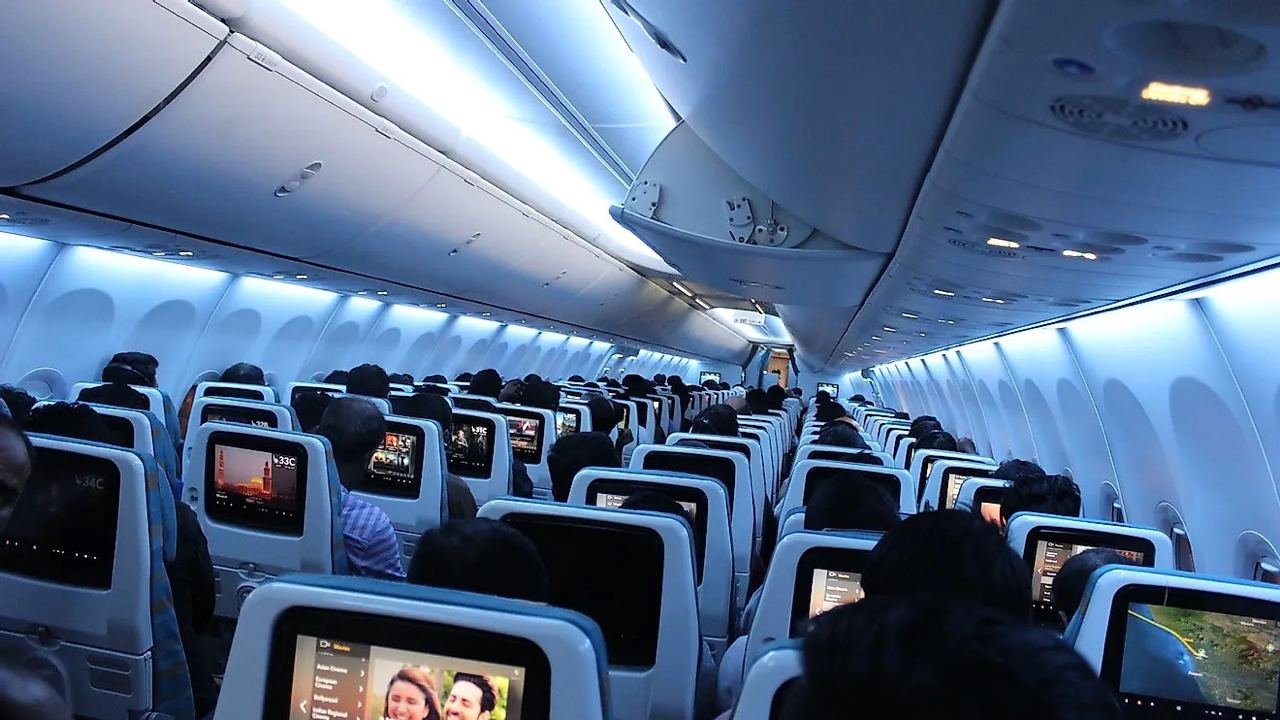
Have you ever stepped aboard a commercial airplane, only to discover the cabin is uncomfortably cold? While cabin temperatures vary, it’s not uncommon for commercial airplanes to maintain a chilly environment of 66 degrees to 68 degrees Fahrenheit. As a result, you might be wondering why airplanes are so cold? After all, most passengers will agree that even 68 degrees Fahrenheit is simply too cold.

Low Humidity Makes It Feel Colder

The low humidity in commercial airplanes makes the cabin air feel colder than what it actually is. According to the World Health Organization (WHO), commercial airplanes have an average relative humidity of just 20%, meaning the cabin air is just one-fifth saturated with moisture. In comparison, the relative humidity level in a typical home may range from 40% to 60%.

Because commercial airplanes have low humidity levels, the air feels cooler than what it actually is. Humidity is a measurement of moisture airborne moisture. When the air is humid, the high level of airborne moisture vapor will insulate your body to minimize loss of body heat. When the air isn’t humid, on the other hand, the lack of airborne moisture vapor will result in your body losing heat more quickly. As a result, you’ll feel colder, even if the temperature doesn’t reflect it.

Cool Air Reduces Risk of Hypoxia

Using a lower temperature for cabin air also reduces the risk of hypoxia in passengers and crew members. A few years, ASTM International released a study showing a connection between instances of onboard fainting and cabin temperature. Researchers from ASTM International found that the combination of low oxygen levels and warm air increased the risk of fainting. When passengers were exposed to warm cabin air, they were more likely to experience hypoxia, resulting in fainting episodes.

Because heat increases the risk of hypoxia, commercial airlines tend to maintain a cool cabin environment. Airplanes naturally have less oxygen in the air than that of the ground air. Unfortunately, some people are susceptible to hypoxia when exposed to environments with low oxygen levels. To protect against hypoxia-related fainting, commercial airlines maintain cool cabins.

In Conclusion

Airplanes are cold for two reasons. First, the air inside a commercial airplane feels cold because it’s dry. With a relative humidity level of just 20%, airplane cabins feel colder than what they actually are. With that said, commercial airlines intentionally maintain cold air inside their cabins to protect passengers and crew members from hypoxia.


Related Posts

AMOS APN Finder
Blogs

AMOS APN Finder

October 16, 2026
MEL Calculator
Blogs

MEL Calculator

October 16, 2026
Blogs

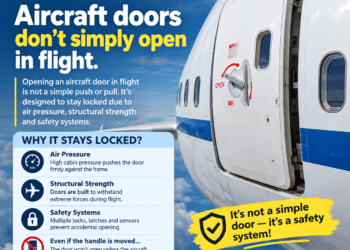
WHY DON’T AIRCRAFT DOORS SIMPLY OPEN IN FLIGHT?

September 7, 2026
Why airplane windows have tiny holes?
Blogs

Why airplane windows have tiny holes?

September 7, 2026
Why airplane windows have tiny holes?
Blogs

Why Your Ears Pop When Flying in an Airplane

September 7, 2026
How the Wings of an Airplane Generate Lift
Blogs

How the Wings of an Airplane Generate Lift

September 7, 2026

Preparing for DGCA AME exams?

Previous year papers, B1 & B2 notes and DGCA-pattern mock tests – all in one place.

Take a Mock Test DGCA Question Papers & Notes
AME QUESTION PAPER

India's first online platform for AME candidates, serving students since 2017 with quality study material for DGCA and EASA exams.

11,75,112 Global visitors
Since 2017 Serving AME students

Study Resources

  • DGCA Papers & Notes
  • Mock Tests
  • EASA Papers & Notes
  • AME Reference Books
  • RTR(A) Classes
  • Members' Results

Quick Links

  • Home
  • About Us
  • Aviation Jobs
  • Aviation News
  • Blogs
  • My Dashboard

Help & Policies

  • Contact Us
  • Terms & Conditions
  • Privacy Policy
  • Refunds & Cancellations
  • Disclaimer

Get in Touch

  • WhatsApp Support +91 75593 69412
  • Support support@amequestionpaper.in
© 2017–2026 AME QUESTION PAPER. All rights reserved. Design by AME QUESTION PAPER ❤

Ok

Create New Account!

Fill the forms below to register

All fields are required. Log In

Retrieve your password

Please enter your username or email address to reset your password.

Log In
✈
AME QUESTION PAPER Support www.amequestionpaper.in
Hi! 👋 How can we help with your DGCA Exam Preparation?
What do you need help with?
DGCA QUESTION PAPERSMOCK TESTRTR(A) CLASSESGUIDANCE
Start WhatsApp Chat WhatsApp Support: +91 75593 69412
No Result
View All Result
  • Home
  • AME
    • DGCA QUESTION PAPER & NOTES
    • MOCK TEST
    • AME REFERENCE BOOKS
    • EASA QUESTION PAPER & NOTES
  • RTR
  • JOBS
  • News
  • Blogs
  • Login
  • Sign Up

Copyright 2017-2026 © All rights Reserved. Design by AME QUESTION PAPER ❤

Insert/edit link

Enter the destination URL

Or link to existing content

    No search term specified. Showing recent items. Search or use up and down arrow keys to select an item.